
Team

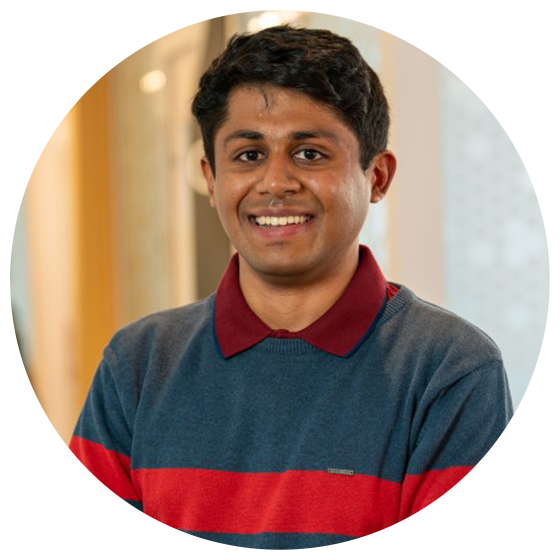
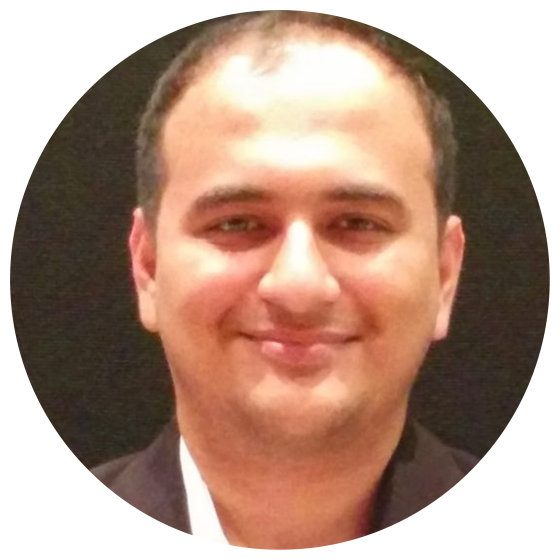
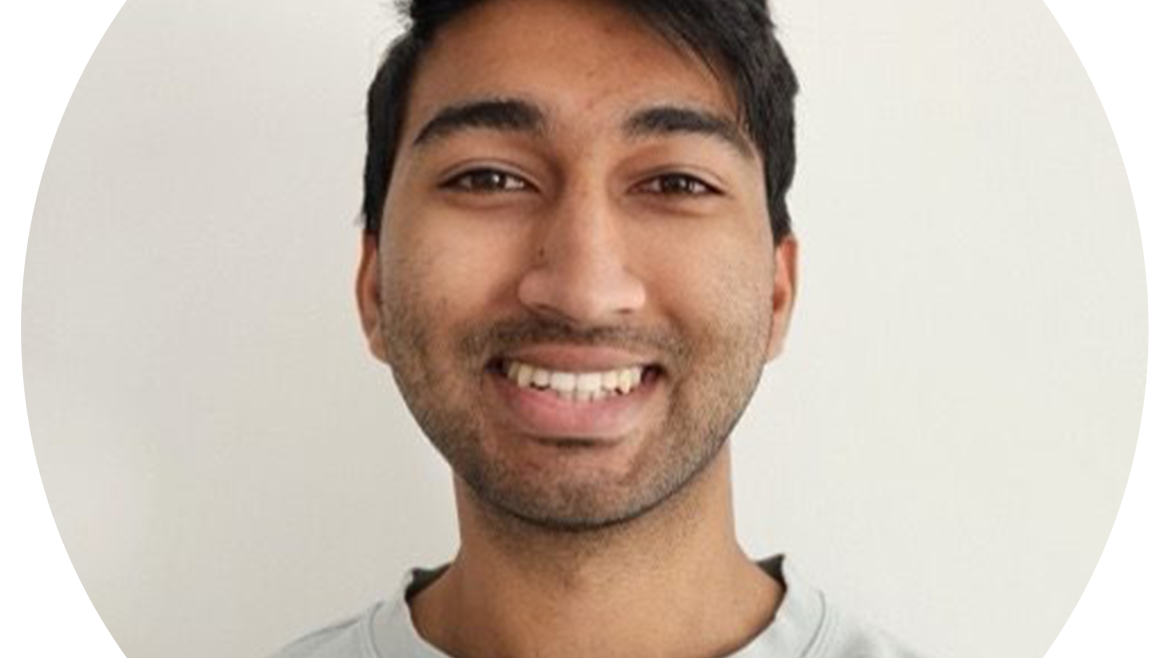
Ankit Ray

1024 1024 admbl

Ankit Ray is a Master’s student at the University of Toronto whose research focuses on developing artificial intelligence methods for liver disease prediction and precision diagnostics. His work integrates clinical, epigenetic, and molecular data to develop non-invasive biomarkers for metabolic dysfunction-associated steatohepatitis (MASH) and disease progression.

Within the Transplant AI Initiative, Ankit contributes to the development of multimodal machine learning models that improve risk stratification and clinical decision-making in hepatology. His broader interests lie at the intersection of artificial intelligence, translational medicine, and precision healthcare, with the goal of developing computational tools that improve patient outcomes.


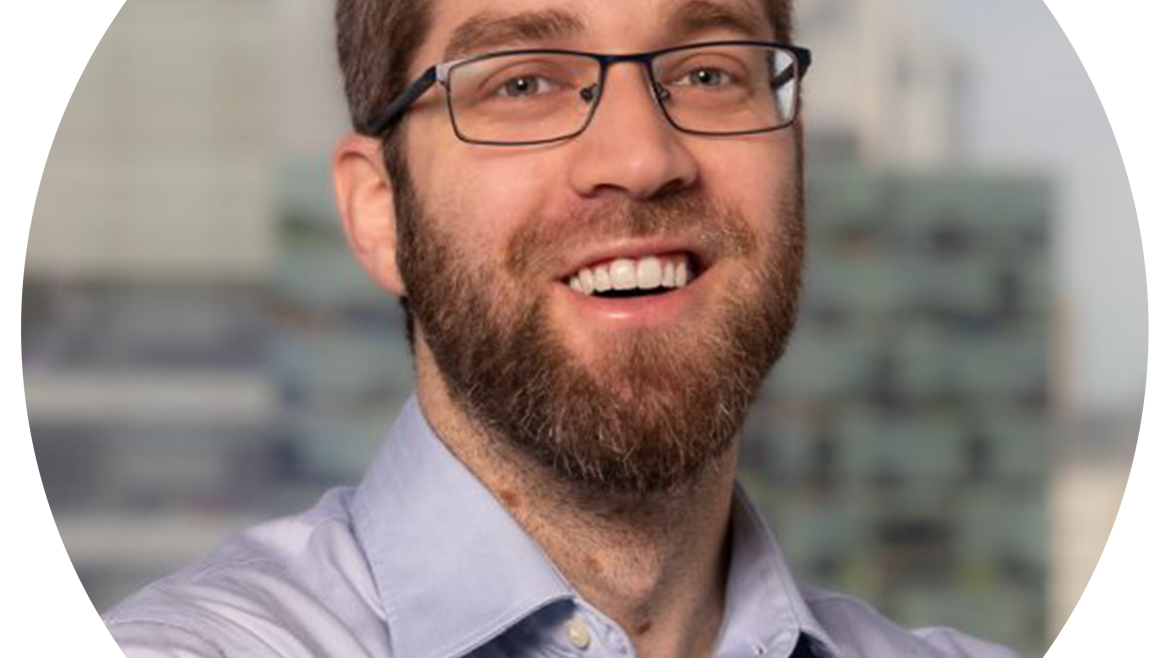
Ming Fang, PhD

1024 1024 admbl

Postdoctoral Researcher 

Ming Fang received her Ph.D. in Biomedical Engineering from the University of Saskatchewan, Canada. Her doctoral research mainly developed deep learning models for medical data analysis, particularly using imaging data, to assist in the early diagnosis of cancer and diseases. Her research interests include bioinformatics, machine/deep learning, computational modeling, and biomedical data analytics. Currently, she is a postdoctoral researcher in Dr. Bhat’s lab, where she is designing AI models for liver transplantation using clinical data, aiming to support personalized healthcare decision-making. 

Google Scholar: https://scholar.google.com/citations?user=KjmAlY4AAAAJ&hl=en 

Layal Jbara, MSc, PhD

1024 1024 admbl

Layal Jbara is an AI Postdoctoral Researcher at the University Health Network and is also affiliated with IMPACT-AI, led by Dr. Divya Sharma at York University. Layal completed her PhD at the University of British Columbia as a Vanier Scholar.  Her work in the Bhat Lab focuses on developing clinical AI to support personalized care after liver transplantation. Her research spans clinical language modeling for electronic health records, computer vision and digital pathology for liver biopsy analysis, and world models and time-series learning for modeling patient trajectories and predicting clinical outcomes. Her work reflects a commitment to developing impactful, patient-centric AI solutions, with innovation and collaboration at the heart of her vision for transformative advances in healthcare.  

 Website: https://layaljbara.github.io/ 

LinkedIn: https://www.linkedin.com/in/layal-jbara-phd-612394a8/ 

Google Scholar:  https://scholar.google.com/citations?user=-9SG7fEAAAAJ&hl=en 

ORCID: https://orcid.org/0009-0009-8714-5395 

Naga Karthik Enamundram, PhD

1024 1024 admbl

Naga Karthik Enamundram is a Postdoctoral Researcher at the University Health Network and an affiliate of the Vector Institute. He completed his PhD at Polytechnique Montréal and Mila – Québec AI Institute, where he developed advanced deep learning methods for quantitative medical image analysis in spinal cord imaging. 

His current research focuses on developing multimodal deep learning models that improve equity and precision in liver transplant allocation. By integrating imaging, laboratory, and clinical data, he develops AI systems that support personalized risk prediction and evidence-based transplant prioritization. His broader interests include trustworthy AI, medical image analysis, and the development of clinically interpretable machine learning methods. 

LinkedIn:
https://www.linkedin.com/in/enamundram-naga-karthik-7b1559174/ 

Google Scholar:
https://scholar.google.ca/citations?user=ZryIoMMAAAAJ&hl=en 

Personal Website:
https://naga-karthik.github.io 

Varun Kanal, PhD

1024 1024 admbl

Varun Kanal earned his PhD in Computer Science and an MS in Biomedical Engineering from the University of Texas at Arlington. His interdisciplinary research combines computational modelling, biomedical engineering, and physiological signal processing to address complex clinical challenges. 

His work has spanned sleep medicine, cardiovascular disease, rehabilitation, fatigue monitoring, and critical care. Within the Bhat Lab, Varun develops machine learning and mathematical modelling approaches that integrate physiological and clinical data to detect and predict acute medical conditions. He is particularly interested in translating computational models into clinically deployable software and hardware systems that support real-time clinical decision-making. 

Google Scholar Link:
https://scholar.google.com/citations?user=W9iizDQAAAAJ&hl=en 

David Pellow, PhD

1024 1024 admbl

David Pellow is a Schmidt AI in Science Postdoctoral Fellow whose research bridges machine learning, clinical prediction, and transplantation. He earned his PhD in Computer Science from Tel Aviv University and an MS in Computer Science from Carnegie Mellon University. 

His research focuses on developing predictive AI models for liver transplantation, including individualized cardiovascular risk prediction after transplantation and personalized optimization of immunosuppressive therapy. By combining modern machine learning with large-scale clinical datasets, David aims to develop robust decision-support systems that improve long-term patient outcomes and facilitate precision transplant medicine. 

Soumita Ghosh, PhD

1024 1024 admbl

Soumita Ghosh earned her PhD in Biostatistics from the Saw Swee Hock School of Public Health at the National University of Singapore, where she developed computational methods for large-scale visualization and analysis of multi-omics datasets. She subsequently held research appointments at the Yong Loo Lin School of Medicine and the Cancer Science Institute of Singapore, where she developed machine learning approaches for cancer prognosis and precision oncology. 

As a Schmidt AI in Science Postdoctoral Fellow in the Bhat Lab, Soumita develops advanced machine learning methods that integrate clinical, genomic, transcriptomic, and epigenomic data to improve the diagnosis, prognosis, and personalized management of liver disease. Her research focuses on translating multimodal AI into clinically deployable tools that enable precision transplantation and oncology. 

Linkedin:
https://www.linkedin.com/in/soumitag/ 

Google Scholar:
https://scholar.google.ca/citations?hl=en&user=O7HZhuwAAAAJ 

ORCID:
https://orcid.org/0000-0003-1743-529X 

Ghazal Azarfar

1024 1024 admbl

Dr. Ghazal Azarfar earned her PhD in Engineering, specialized in computational imaging from the University of Wisconsin. She leads the technical development of innovative multimodal AI approaches aimed at transforming healthcare.

She is a member of the Transplant AI Initiative, where she works at the intersection of clinical medicine, computer science, and biostatistics to advance transplant care, with a particular focus on pre- and post-transplant complications. Her current research focuses on the responsible deployment of a multi-agent AI tool that simulates transplant committee deliberations, aiming to generate objective consensus for equitable waitlisting decisions.

LinkedIn
https://www.linkedin.com/in/ghazal-azarfar-6691b7121/

Google Scholar
https://scholar.google.com/citations?user=p8tRKD8AAAAJ&hl=en

ORCID
https://orcid.org/0000-0002-8178-6169

Dariia Khoroshchuk

1024 1024 admbl

Dariia Khoroshchuk completed a Bachelor’s degree in Applied Mathematics and a Master’s degree in Computer Science specializing in Artificial Intelligence Systems at Lviv Polytechnic National University. Before joining the Bhat Lab, she collaborated with Professor Michael Brudno’s laboratory, where she developed deep learning methods for automated pneumothorax detection using chest radiographs.

Her current research focuses on developing multimodal machine learning models that improve liver transplant waitlist prioritization through individualized prediction of mortality and waitlist dropout risk. She works on integrating diverse clinical data sources to support equitable and data-driven transplant allocation.

Dariia is dedicated to developing clinically meaningful AI technologies that improve decision-making and patient outcomes in transplantation.

Yingji Sun

1024 1024 admbl

Yingji Sun joined the Bhat Lab in 2021 as a Machine Learning Analyst. She holds both an MSc in Biostatistics and an Honours BSc in Physiology and Statistics from the University of Toronto.

Her research combines biostatistics and artificial intelligence to develop predictive models that support clinical decision-making throughout the transplant journey. Her work includes modelling transplant waitlist outcomes, predicting post-transplant complications, and developing personalized survival prediction tools that improve patient risk stratification and treatment planning.

Yingji is passionate about translating advanced statistical learning methods into clinically deployable technologies that enhance precision medicine in solid organ transplantation.

Privacy Preferences

When you visit our website, it may store information through your browser from specific services, usually in the form of cookies. Here you can change your Privacy preferences. It is worth noting that blocking some types of cookies may impact your experience on our website and the services we are able to offer.

Click to enable/disable Google Analytics tracking code.
Click to enable/disable Google Fonts.
Click to enable/disable Google Maps.
Click to enable/disable video embeds.
Our website uses cookies, mainly from 3rd party services. Define your Privacy Preferences and/or agree to our use of cookies.